Buy digitaltrends.eu ?
We are moving the project
digitaltrends.eu .
Are you interested in purchasing the domain
digitaltrends.eu ?
domain@kv-gmbh.de · 0541-91531010
Buy digitaltrends.eu ?
How do you convert ln to ln?
To convert ln to ln, you do not need to do anything as they are the same function. The natural logarithm function is denoted by ln, so ln is already in the form of the natural logarithm. **
Why is ln(14) equal to ln(4)?
ln(14) is not equal to ln(4). ln(14) is the natural logarithm of 14, while ln(4) is the natural logarithm of 4. These two values are not equal to each other. **


Similar search terms for Ln
Top-Angebote
Products related to Ln:
-
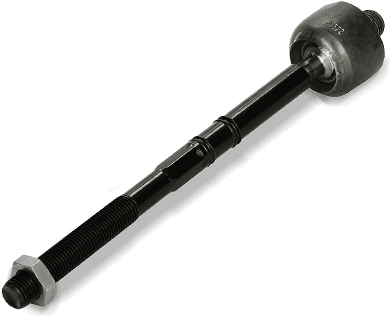
MOOG LN-AX-2677 Inner tie rodLength [mm]: 216; Diameter 1 [mm]: 14,5; Thread Type: with right-hand thread; Container Type: Box; Thread Size 1: M14X1.5; Thread Size 2: M14X1.5; Packaging length [cm]: 34,5; Packaging width [cm]: 8,5; Packaging height [cm]: 6,5; Fitting Position: Front Axle10,99 £*Shipping: 8,45 £Secure redirect to the provider
-
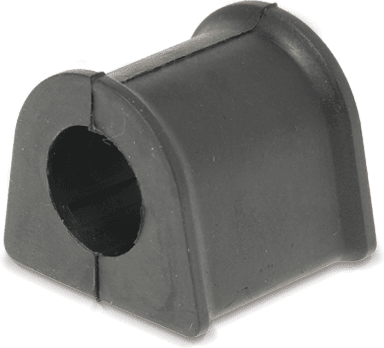
MOOG LN-SB-4864 Trailing arm / Suspension arm bushDiameter: 14,5; Length [mm]: 60,5; Height: 52; Container Type: Bag; Packaging length [cm]: 6; Packaging width [cm]: 6; Packaging height [cm]: 5,5; Fitting Position: Front Axle, both sides, Rear14,49 £*Shipping: 8,45 £Secure redirect to the provider
-
Affinity Software (1.10.6) Bundle CD Key (Lifetime / 5 Devices)Affinity Software 1.10.6 Bundle – Lifetime License for 5 Devices (Full Overview + Activation) Affinity 1.10.6 Bundle is a one-time purchase software suite from Serif , featuring three professional-grade creative applications: Affinity Photo , Affinity Designer , and Affinity Publisher . This bundle is ideal for creatives who want powerful tools without a subscription, offering lifetime access across multiple devices. Included Applications Affinity Photo – Advanced photo editing with RAW support, HDR merge, retouching, and batch processing Affinity Designer – Vector and raster design for branding, UI/UX, illustration, and concept art Affinity Publisher – Desktop publishing for books, magazines, marketing materials, and more License Details Version : 1.10.6 License Type : Lifetime (one-time payment) Device Limit : Up to 5 devices (Windows and/or macOS) Delivery : Digital download with CD key Key Features No subscription required – pay once, own forever Cross-platform support for Windows and macOS Offline activation available Optimized for multi-core CPUs and GPU acceleration Professional-grade performance for photo editing, graphic design, and publishing Activation Instructions Download the apps from the official https://affinity.serif.com/en-us/ or your retailer’s link Install Affinity Photo, Designer, and Publisher on your device(s) Launch each app and go to the activation or registration screen Enter your CD key and email address Click “Activate” to unlock the full version Repeat on up to 5 devices using the same license Ideal For Graphic designers and illustrators Photographers and editors Publishers and layout artists Students, educators, and freelancers Small businesses seeking affordable creative tools3,92 £*Shipping: 0,00 £Secure redirect to the provider


-
Why is ln(x) = 1, ln(x) = pi, ln(x) = i with x > 0?
The natural logarithm function, ln(x), is the inverse of the exponential function, e^x. When ln(x) = 1, it means that e^1 = x, so x = e. When ln(x) = pi, it means that e^pi = x. And when ln(x) = i, it means that e^i = x. In all cases, x is a positive real number because e raised to any real number or imaginary number is always positive. **
-
Why are ln(0.5) and ln(2) the same?
ln(0.5) and ln(2) are the same because they are inverse operations of each other. The natural logarithm function ln(x) is the inverse of the exponential function e^x. So, ln(0.5) is the exponent to which e must be raised to equal 0.5, and ln(2) is the exponent to which e must be raised to equal 2. Since 0.5 and 2 are reciprocals of each other, their natural logarithms will be equal. **
-
What is ln?
ln stands for the natural logarithm, which is the logarithm to the base of the mathematical constant e (approximately equal to 2.71828). It is commonly used in mathematics to solve exponential equations and to represent the inverse operation of the exponential function. The natural logarithm is denoted by the symbol ln(x), where x is the number for which the logarithm is being calculated. **
-
What is the derivative of ln(x) + x + ln(2x)?
The derivative of ln(x) is 1/x, the derivative of x is 1, and the derivative of ln(2x) is 2/x. Therefore, the derivative of ln(x) + x + ln(2x) is 1/x + 1 + 2/x. **
Is ln(e^x) and e^(ln(x)) the same?
No, ln(e^x) and e^(ln(x)) are not the same. ln(e^x) simplifies to x, while e^(ln(x)) simplifies to x. This is because ln(e^x) is the natural logarithm of e raised to the power of x, which simplifies to x, and e^(ln(x)) is e raised to the power of the natural logarithm of x, which also simplifies to x. Therefore, ln(e^x) and e^(ln(x)) are equivalent and both simplify to x. **
What is the derivative of ln(x^2 * ln(x^2))?
To find the derivative of ln(x^2 * ln(x^2)), we can use the chain rule. First, we can rewrite the function as ln(x^2) + ln(ln(x^2)). Then, we can take the derivative of each part separately. The derivative of ln(x^2) is 2x/x^2 = 2/x, and the derivative of ln(ln(x^2)) is 1/ln(x^2) * 1/x^2 * 2x = 2/(x*ln(x^2)). Therefore, the derivative of ln(x^2 * ln(x^2)) is 2/x + 2/(x*ln(x^2)). **
Top-Angebote
Products related to Ln:
-
MOOG LN-TC-4835 Suspension armControl/Trailing Arm Type: Control Arm; Container Type: Box; Supplementary Article / Supplementary Info Info 2: with ball joint, with rubber mount; Paired product: LN-TC-4800; Packaging length [cm]: 51; Packaging width [cm]: 44,5; Packaging height [cm]: 15; Fitting Position: Front Axle Right63,99 £*Shipping: 8,45 £Secure redirect to the provider
-
MOOG LN-WP-13620 Suspension armControl/Trailing Arm Type: Control Arm; Container Type: Box; Supplementary Article / Supplementary Info Info 2: with ball joint, with rubber mount; Paired product: LN-WP-13619; Packaging length [cm]: 61,2; Packaging width [cm]: 34,4; Packaging height [cm]: 8,8; Fitting Position: Front Axle Right50,99 £*Shipping: 8,45 £Secure redirect to the provider
-
MOOG LN-AX-2677 Inner tie rodLength [mm]: 216; Diameter 1 [mm]: 14,5; Thread Type: with right-hand thread; Container Type: Box; Thread Size 1: M14X1.5; Thread Size 2: M14X1.5; Packaging length [cm]: 34,5; Packaging width [cm]: 8,5; Packaging height [cm]: 6,5; Fitting Position: Front Axle10,99 £*Shipping: 8,45 £Secure redirect to the provider
-
How do you convert ln to ln?
To convert ln to ln, you do not need to do anything as they are the same function. The natural logarithm function is denoted by ln, so ln is already in the form of the natural logarithm. **
-
Why is ln(14) equal to ln(4)?
ln(14) is not equal to ln(4). ln(14) is the natural logarithm of 14, while ln(4) is the natural logarithm of 4. These two values are not equal to each other. **
-
Why is ln(x) = 1, ln(x) = pi, ln(x) = i with x > 0?
The natural logarithm function, ln(x), is the inverse of the exponential function, e^x. When ln(x) = 1, it means that e^1 = x, so x = e. When ln(x) = pi, it means that e^pi = x. And when ln(x) = i, it means that e^i = x. In all cases, x is a positive real number because e raised to any real number or imaginary number is always positive. **
-
Why are ln(0.5) and ln(2) the same?
ln(0.5) and ln(2) are the same because they are inverse operations of each other. The natural logarithm function ln(x) is the inverse of the exponential function e^x. So, ln(0.5) is the exponent to which e must be raised to equal 0.5, and ln(2) is the exponent to which e must be raised to equal 2. Since 0.5 and 2 are reciprocals of each other, their natural logarithms will be equal. **
Similar search terms for Ln
-
MOOG LN-SB-4864 Trailing arm / Suspension arm bushDiameter: 14,5; Length [mm]: 60,5; Height: 52; Container Type: Bag; Packaging length [cm]: 6; Packaging width [cm]: 6; Packaging height [cm]: 5,5; Fitting Position: Front Axle, both sides, Rear14,49 £*Shipping: 8,45 £Secure redirect to the provider
-
Affinity Software (1.10.6) Bundle CD Key (Lifetime / 5 Devices)Affinity Software 1.10.6 Bundle – Lifetime License for 5 Devices (Full Overview + Activation) Affinity 1.10.6 Bundle is a one-time purchase software suite from Serif , featuring three professional-grade creative applications: Affinity Photo , Affinity Designer , and Affinity Publisher . This bundle is ideal for creatives who want powerful tools without a subscription, offering lifetime access across multiple devices. Included Applications Affinity Photo – Advanced photo editing with RAW support, HDR merge, retouching, and batch processing Affinity Designer – Vector and raster design for branding, UI/UX, illustration, and concept art Affinity Publisher – Desktop publishing for books, magazines, marketing materials, and more License Details Version : 1.10.6 License Type : Lifetime (one-time payment) Device Limit : Up to 5 devices (Windows and/or macOS) Delivery : Digital download with CD key Key Features No subscription required – pay once, own forever Cross-platform support for Windows and macOS Offline activation available Optimized for multi-core CPUs and GPU acceleration Professional-grade performance for photo editing, graphic design, and publishing Activation Instructions Download the apps from the official https://affinity.serif.com/en-us/ or your retailer’s link Install Affinity Photo, Designer, and Publisher on your device(s) Launch each app and go to the activation or registration screen Enter your CD key and email address Click “Activate” to unlock the full version Repeat on up to 5 devices using the same license Ideal For Graphic designers and illustrators Photographers and editors Publishers and layout artists Students, educators, and freelancers Small businesses seeking affordable creative tools3,92 £*Shipping: 0,00 £Secure redirect to the provider
-
Affinity Software (1.10.6) Bundle CD Key (Lifetime / Unlimited Devices)Affinity Software 1.10.6 Bundle – Lifetime License for Windows & macOS Unlock your creative potential with the Affinity Software 1.10.6 Bundle , a professional-grade suite that includes Affinity Designer , Affinity Photo , and Affinity Publisher — all in one lifetime license. This bundle is ideal for graphic designers, photographers, and publishers who want powerful tools without the burden of subscriptions. What’s Included Affinity Designer 1.10.6 Industry-leading vector graphics software for creating logos, UI designs, concept art, and web mockups. Known for its precision, speed, and smooth performance. Affinity Photo 1.10.6 High-end photo editing software built for professionals. Offers advanced retouching, multi-layered compositions, and RAW editing capabilities. Affinity Publisher 1.10.6 A next-generation publishing tool for creating books, magazines, marketing materials, and more. Seamlessly integrates with Designer and Photo for full creative control. Key Features No subscription required Compatible with Windows and macOS Fast, responsive performance even with large files Professional tools for vector design, photo editing, and layout creation Seamless integration between apps for a unified workflow Supports CMYK, RGB, and ICC color profiles Multi-language support including English, German, French, Spanish, and more Important Notes This is an older version (1.10.6) and cannot be upgraded to Affinity V2 Ideal for users who prefer a stable, one-time purchase solution Activation via product key after download Installation & Activation Instructions Activate each app using the provided Organization and Registration Code . Follow these steps to download and set up your software: 1. Download Affinity Designer Windows: https://store.serif.com/en-us/update/windows/designer/1/ macOS: https://store.serif.com/en-us/update/macos/designer/1/ 2. Download Affinity Photo Windows: https://store.serif.com/en-us/update/windows/photo/1/ macOS: https://store.serif.com/en-us/update/macos/photo/1/ 3. Download Affinity Publisher Windows: https://store.serif.com/en-us/update/windows/publisher/1/ macOS: https://store.serif.com/en-us/update/macos/publisher/1/ 4. Link Your Affinity Account After installation, sign in with your Affinity account or email to complete activation. Note : This bundle includes version 1.10.6 , which is a legacy release. It does not support upgrades to Affinity V2 or future updates.5,93 £*Shipping: 0,00 £Secure redirect to the provider
-
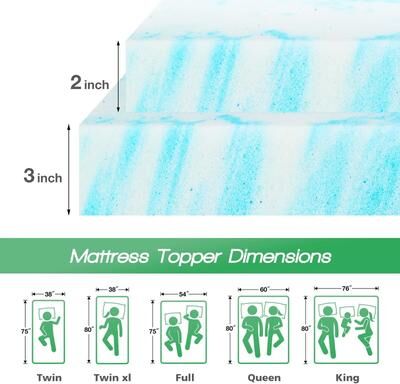
Uplifted Finds Gel Memory Foam Mattress Topper Full Size 2 To 3 Inch Cooling And Breathable Bed Topper 3 Ln QueenUpgrade your sleep experience with this gel infused memory foam mattress topper. Designed for full size beds, its 2 to 3 inch layer provides supportive comfort while keeping you cool throughout the night. Soft, breathable, and pressure relieving, it...229,97 $*Shipping: 0,00 $Secure redirect to the provider
-
What is ln?
ln stands for the natural logarithm, which is the logarithm to the base of the mathematical constant e (approximately equal to 2.71828). It is commonly used in mathematics to solve exponential equations and to represent the inverse operation of the exponential function. The natural logarithm is denoted by the symbol ln(x), where x is the number for which the logarithm is being calculated. **
-
What is the derivative of ln(x) + x + ln(2x)?
The derivative of ln(x) is 1/x, the derivative of x is 1, and the derivative of ln(2x) is 2/x. Therefore, the derivative of ln(x) + x + ln(2x) is 1/x + 1 + 2/x. **
-
Is ln(e^x) and e^(ln(x)) the same?
No, ln(e^x) and e^(ln(x)) are not the same. ln(e^x) simplifies to x, while e^(ln(x)) simplifies to x. This is because ln(e^x) is the natural logarithm of e raised to the power of x, which simplifies to x, and e^(ln(x)) is e raised to the power of the natural logarithm of x, which also simplifies to x. Therefore, ln(e^x) and e^(ln(x)) are equivalent and both simplify to x. **
-
What is the derivative of ln(x^2 * ln(x^2))?
To find the derivative of ln(x^2 * ln(x^2)), we can use the chain rule. First, we can rewrite the function as ln(x^2) + ln(ln(x^2)). Then, we can take the derivative of each part separately. The derivative of ln(x^2) is 2x/x^2 = 2/x, and the derivative of ln(ln(x^2)) is 1/ln(x^2) * 1/x^2 * 2x = 2/(x*ln(x^2)). Therefore, the derivative of ln(x^2 * ln(x^2)) is 2/x + 2/(x*ln(x^2)). **
* All prices are inclusive of VAT and, if applicable, plus shipping costs. The offer information is based on the details provided by the respective shop and is updated through automated processes. Real-time updates do not occur, so deviations can occur in individual cases. ** Note: Parts of this content were created by AI.