Buy digitaltrends.eu ?
We are moving the project
digitaltrends.eu .
Are you interested in purchasing the domain
digitaltrends.eu ?
domain@kv-gmbh.de · 0541-91531010
Buy digitaltrends.eu ?
What did Poggio steal?
Poggio Bracciolini, an Italian scholar and scribe, is known for stealing a manuscript containing the only surviving copy of Lucretius' "De rerum natura" (On the Nature of Things) from a German monastery in the 15th century. This act of theft was significant because it led to the rediscovery and subsequent dissemination of this important work of ancient Roman poetry and philosophy, which had been lost for centuries. Poggio's theft played a crucial role in preserving and transmitting the ideas of Lucretius to future generations. **
When do you use il faut and il ne faut pas?
"Il faut" is used to express what is necessary or required, while "il ne faut pas" is used to express what is not allowed or should be avoided. For example, you would use "il faut" to say "il faut étudier pour réussir" (it is necessary to study to succeed), and "il ne faut pas" to say "il ne faut pas fumer dans ce lieu" (smoking is not allowed in this place). These expressions are used to give advice, make recommendations, or set rules. **

Similar search terms for Il-Guardiano-Poggio-Mandorlo
Top-Angebote
Products related to Il-Guardiano-Poggio-Mandorlo:
-
Red Poggio Mandorlo 2018The Poggio Mandorlo is a full-bodied and structured red wine made by the eponymous Tuscan winery, which is positioned as its flagship label. Born in 2001 from the passion of four friends, who initially relied on the expert and renowned oenologist Roberto Cipressi, this winery is now technically and oenologically guided by Filippo Paoletti, consultant for important production realities in Montalcino. Since its foundation, Poggio Mandorlo has strongly focused on the Bordeaux grape varieties Merlot and Cabernet Franc, which make up the blend of this prestigious label with an international appeal. The Tuscan Supertuscan Poggio Mandorlo consists of a blend of Merlot (70%) and Cabernet Franc (30%), varieties planted between 2001 and 2002 on soils formed by marl, sandstone, and limestone, at about 400 meters above sea level. When the grapes have reached perfect ripeness, manual harvesting and careful selection of the bunches take place, which are then fermented in steel tanks where alcoholic fermentation occurs at controlled temperature.controlled, with 18-21 days of maceration on the skins. Subsequently, the mass is transferred to French oak barriques, where it rests for 30 months before being bottled. After at least a year of further aging in glass, the wine is finally ready to be marketed. The Poggio Mandorlo has a beautiful intense ruby red color. The aromatic range, rich and complex, unfolds with fruity aromas of blackberries and blueberries and pleasant notes of tobacco, leather, and chocolate. Delicate mineral and herbal perceptions complete the olfactory context. Full and satisfying on the palate, with an enveloping and sweet tannic structure that leads to a persistent and harmonious finish, rich in returns consistent with the nose.43,00 £*Shipping: 48,00 £Secure redirect to the provider
-
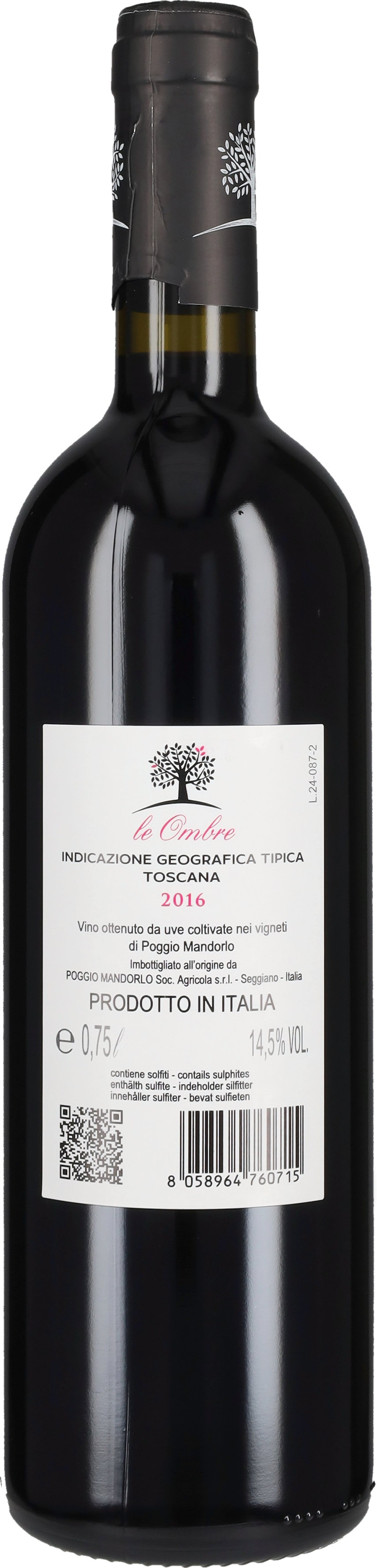
'Le Ombre' Poggio Mandorlo 2016“Le Ombre” from the Poggio Mandorlo winery is a full-bodied and structured red wine produced in Seggiano, in the province of Grosseto, in the beautiful Tuscan Maremma. It is born from a blend of grapes that sees the international Merlot and Cabernet Franc join Sangiovese to create a red of great intensity and pleasantness. The vines, located on hills at about 400 meters above sea level with a north-west exposure, are cultivated using the spurred cordon method on soils characterized by rich sandstone marl and limestone. The winery, owner of about 38 hectares, of which 12 are planted with vines, was born from the passion for wine of a group of friends with different experiences but united by the desire to try and experiment with the potential of a territory they have always lived in and loved. Poggio Mandorlo “Le Ombre” is a Super Tuscan that is produced only in the best vintages with carefully selected grapes harvested by hand at the moment of their perfect ripeness. The bunches are brought to the winery in small crates to be gently crushed and carry out the alcoholic fermentation that takes place at controlled temperature in stainless steel tanks with a maceration on the skins of about three weeks. Subsequently, the wine is racked with pressing of the skins, after which it remains in aging for at least 18 months in French oak barriques of first passage before being bottled and ready for market release. The wine “Le Orme” from Poggio Mandorlo presents a view of an intense and bright garnet red color. On the nose, aromas of ripe dark fruit and jam appear, including cherry, blackberry, blackcurrant, and plum, herbaceous and floral notes of dried flowers, spicy hints of sweet spices, including vanilla and tobacco, licorice and leather, then shifting to balsamic hints of mint and minerals of wet stone. On the palate, it is warm, enveloping, intense, and soft, characterized by good sapidity and an evolved tannic structure. This wine from the Poggio Mandorlo winery is a complex and balanced red with a very persistent finish played on balsamic notes.32,00 £*Shipping: 48,00 £Secure redirect to the provider
-
Montecucco Sangiovese 'La Querce' Poggio Mandorlo 2018"La Querce" Montecucco Sangiovese by Poggio Mandorlo represents an expression of the pure variety of the same name capable of expressing its territoriality in a modern key, with great attention to the evolution of tastes and the market. The Montecucco Sangiovese DOCG, located between the Tuscan Maremma and the slopes of Mount Amiata, where the Poggio Mandorlo winery is based, imposes a minimum use of 90 percent Sangiovese, with the wine having to be aged at least 12 months in wooden barrels, rising to 24 in the Riserva version. Montecucco Sangiovese "La Querce" Poggio Mandorlo is a 100% Sangiovese from vineyards planted between 2001 and 2002 on soils rich in sandstone marl and limestone, located about 400 meters above sea level. Manual harvesting is followed by meticulous selection of the grapes, which are then vinified in red with temperature-controlled alcoholic fermentation in steel tanks accompanied by 18-21 days of contact between the must and the skins. Aging takes place between large barrels and tonneaux for 30 months before bottling and further aging in glass prior to release. In the glass, the red wine from the Tuscan winery Poggio Mandorlo "La Querce" Montecucco Sangiovese takes on a deep ruby red color. Vivid fruity suggestions of black cherry and berries, enriched by floral notes of violets and red roses that blend with delicate spicy and balsamic tones. The palate is fresh and pulpy, intense and rich, with very silky tannins. The finish, of great taste-olfactory correspondence, insists on memories of black fruit and spices. 'La Querce' goes well with dishes of a certain structure, such as savory meat preparations.21,00 £*Shipping: 48,00 £Secure redirect to the provider
-
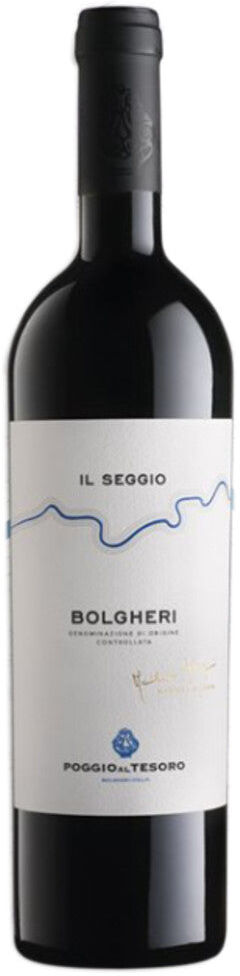
Bolgheri Rosso 'Il Seggio' Poggio al Tesoro 2023Il Bolgheri Rosso “Il Seggio'” di Poggio al Tesoro è un rosso che regala già al primo sorso freschezza e intensità gusto-olfattiva. Questo taglio bordolese dal profilo moderno e mediterraneo deve il suo nome al fiume Seggio, il maggior corso d’acqua del Comune di Castagneto Carducci. La storica casa vinicola Allegrini dal 2003 ha affondato le sue radici in quest’area di eccezionale valore e noto potenziale produttivo con l’idea di dar vita a etichette di forte identità, struttura e lunga evoluzione. Il “Seggio” Bolgheri Rosso è un classico assemblaggio bordolese di varietà internazionali quali Merlot, Cabernet Sauvignon, Cabernet Franc e Petit Verdot che provengono da 2 vigneti principali di proprietà di Poggio al Tesoro: Via Bolgherese e Le Sondraie. I terreni tipici della zona mutano progressivamente dal giallo al marrone, hanno antiche origini marine e sono caratterizzati da sabbie ricche di scheletro che accolgono alla perfezione i Cabernet e da argille miste che regalano eleganza e armonia al Merlot. L’affinamento di 15 mesi in barrique di primo e secondo passaggio, oltre a ridurre la naturale astringenza dovuta ai tannini giovani, permette a questo rosso del Bolgheri di assumere una maggior morbidezza, così da regalare un sorso avvolgente e setoso. Il Bolgheri “Seggio” è un rosso espressivo, pieno e corposo che ben si abbina a primi e secondi piatti a base di carne rossa. Al calice si presenta di un limpido e intenso rosso rubino e al naso dona note inconfondibili di macchia mediterranea, che ci ricordano continuamente la zona di provenienza, frutta rossa matura e erbe balsamiche. Al palato è di buona struttura e consistenza con una trama tannica elegante e avvolgente che lascia in bocca un finale succoso, di media lunghezza e precisione.24,00 £*Shipping: 48,00 £Secure redirect to the provider


-
What is the difference between il faut que and il faut?
"Il faut" is used to express a general necessity or obligation, while "il faut que" is used to introduce a specific action or event that is necessary or required. For example, "il faut manger" means "it is necessary to eat" in a general sense, while "il faut que tu manges" means "you need to eat" in a specific sense. "Il faut" is used to make a general statement about what is necessary, while "il faut que" is used to specify what needs to be done. **
-
Why is it souhaite-t-il and not souhaite-s-il?
In French, the pronoun "il" (he) is combined with the verb "souhaiter" (to wish) to form the phrase "souhaite-t-il" because of the rule of verb inversion in interrogative sentences. When forming a question in French, the subject pronoun and the verb are inverted, so "souhaite-t-il" follows this rule. The "t" is added to create a liaison between the verb and the pronoun, making the pronunciation smoother. **
-
What comes after il faudrait in French?
In French, "il faudrait" is followed by the infinitive form of a verb. This construction is used to express a suggestion or a polite request. For example, "il faudrait partir tôt" means "it would be necessary to leave early." **
-
How does "il faut" work in French?
"Il faut" is a common expression in French that is used to convey the idea of necessity or obligation. It is followed by an infinitive verb and is used to express what needs to be done or what is necessary in a given situation. For example, "Il faut manger" means "It is necessary to eat." This expression is used to give advice, make suggestions, or express general truths. **
What is an El, Sl, and Il?
An El, Sl, and Il are all suffixes used in the English language to form adjectives. "El" is used to form adjectives that mean "pertaining to" or "characterized by," such as in the word "musical." "Sl" is used to form adjectives that mean "tending to" or "inclined to," such as in the word "careful." "Il" is used to form adjectives that mean "having the nature of" or "capable of," such as in the word "flexible." These suffixes help to create new adjectives by modifying the meaning of the base word. **
What do the abbreviations el and il mean?
The abbreviation "el" typically stands for "elevated" and is commonly used in the context of transportation systems, such as an "el train" which refers to an elevated railway. On the other hand, "il" is often used as an abbreviation for "Illinois," which is a state in the United States. It can also be used as an abbreviation for "in-line" in various contexts, such as in sports or technology. **
Top-Angebote
Products related to Il-Guardiano-Poggio-Mandorlo:
-
Il Guardiano Poggio Mandorlo 2020Poggio Mandorlo presents ‘Il Guardiano’, a Supertuscan made exclusively in steel, in order to preserve the freshness and all the varietal components of the grapes at the base of the blend: Sangiovese and Merlot. We are in Toscana, at the foot of Monte Amiata, in the heart of Alta Maremma. Here, Poggio Mandorlo cultivates 12 hectares of vineyards planted with Sangiovese, Merlot, and Cabernet Franc, varieties that benefit from volcanic soils and a mild, breezy climate. The first vintage produced of this label was 2009. ‘Il Guardiano’ Poggio Mandorlo comes from a blend of Sangiovese (85%) and Merlot (15%), planted between 2001 and 2002 on soils made up of sandstone marls and limestone, at about 400 meters above sea level. Following manual harvesting and careful selection, the grapes are transferred to the winery for alcoholic fermentation in steel tanks at controlled temperature, with 16-18 days of contact between the must and the skins. The subsequent maturation period always takes place in steel for 18 months, followed by 4-6 months of refinement in bottle before its market release. To the eye, Poggio Mandorlo ‘Il Guardiano’ presents itself with a dark ruby red color. Intense and complex are the fruity and floral perceptions, accompanied by aromas of underbrush and aromatic herbs, while the tasting is soft and balanced, supported by lively freshness and moderate tannic structure. Fragrant returns of great taste-olfactory correspondence. A bottle capable of highlighting the most refreshing and pure character of this blend, to be paired with various preparations based on local meats, such as lamb stew or pappardelle with hare ragù.14,00 £*Shipping: 48,00 £Secure redirect to the provider
-
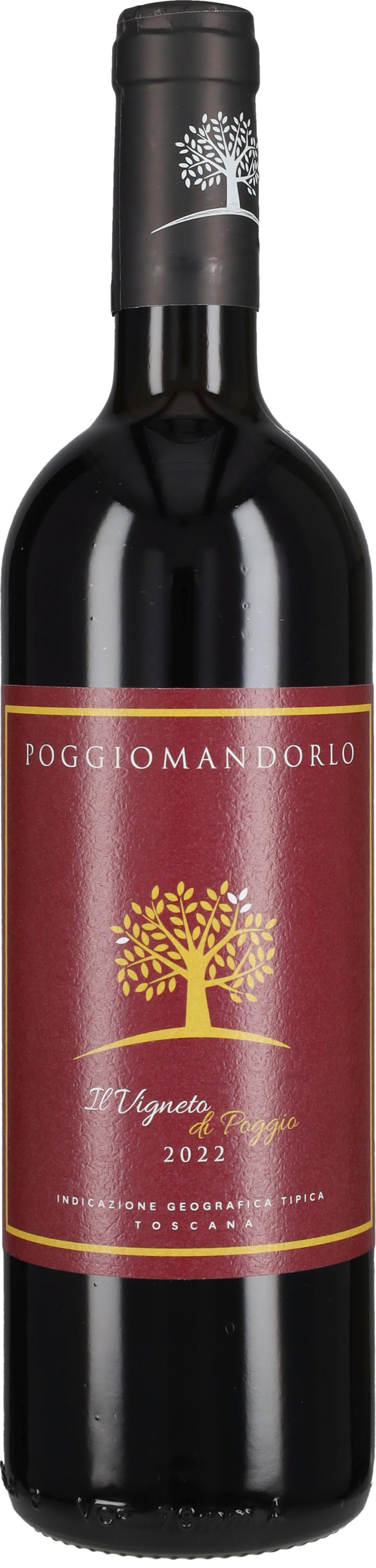
'Il Vigneto di Poggio' Poggio Mandorlo 2022“The Vineyard of Poggio” by Poggio Mandorlo is a proud expression of the rich wine landscape of Maremma. It tells the story of four friends: Roberto, Felice, Giuseppe, and Fabio, who for about twenty years have decided to experiment with the potential of a territory. Supported by the oenologist Roberto Cipresso first and then Filippo Paoletti, noted figures from the Montalcino area, they have managed to navigate the virtues of the Seggiano soils to obtain unique and never banal labels. Located at the crossroads between Val Norcia and the first hills of the Grosseto Maremma, at the foot of the Amiata volcano, the winery decides to cultivate not only Sangiovese but also rare and unique clones of Merlot and Cabernet Franc, which they import directly from Saint-Émilion in the Bordeaux region. The latest offspring of Poggio Mandorlo is precisely “the Vineyard of Poggio”, capable of expressing the versatility of the sandstone and limestone marls on which the Merlot, of which this interesting label is entirely composed, takes root. The vines were planted in 2001 and the harvest is carried out exclusively with manual selection. Fermentation takes place in stainless steel tanks at controlled temperature, during which delicate pump-overs are performed. The maceration period varies from 8 to 12 days and is meticulously monitored through chemical and sensory analysis. The 12 months of aging also take place in steel, giving us a bottle that perfectly expresses the great varietal rigor even through an international grape variety. Poggio Mandorlo with its “Vigneto di Poggio” of pure Merlot envelops us with its shining ruby veil to gift us with scents of wilted rose and wild fruit, pleasant notes of plum, underbrush, cherry, and a finish of black pepper and cinnamon. On the palate, it presents warm aromas for a full body in which the fragrance of red fruit is found, with a pleasant fresh shoulder softened by a good sapidity, the tannin is tasty and almost caressing. Poggio Mandorlo expresses all its commitment to the passion for the land and the love for good wine, reflecting in the personality of this pleasing label.12,00 £*Shipping: 48,00 £Secure redirect to the provider
-
Red Poggio Mandorlo 2018The Poggio Mandorlo is a full-bodied and structured red wine made by the eponymous Tuscan winery, which is positioned as its flagship label. Born in 2001 from the passion of four friends, who initially relied on the expert and renowned oenologist Roberto Cipressi, this winery is now technically and oenologically guided by Filippo Paoletti, consultant for important production realities in Montalcino. Since its foundation, Poggio Mandorlo has strongly focused on the Bordeaux grape varieties Merlot and Cabernet Franc, which make up the blend of this prestigious label with an international appeal. The Tuscan Supertuscan Poggio Mandorlo consists of a blend of Merlot (70%) and Cabernet Franc (30%), varieties planted between 2001 and 2002 on soils formed by marl, sandstone, and limestone, at about 400 meters above sea level. When the grapes have reached perfect ripeness, manual harvesting and careful selection of the bunches take place, which are then fermented in steel tanks where alcoholic fermentation occurs at controlled temperature.controlled, with 18-21 days of maceration on the skins. Subsequently, the mass is transferred to French oak barriques, where it rests for 30 months before being bottled. After at least a year of further aging in glass, the wine is finally ready to be marketed. The Poggio Mandorlo has a beautiful intense ruby red color. The aromatic range, rich and complex, unfolds with fruity aromas of blackberries and blueberries and pleasant notes of tobacco, leather, and chocolate. Delicate mineral and herbal perceptions complete the olfactory context. Full and satisfying on the palate, with an enveloping and sweet tannic structure that leads to a persistent and harmonious finish, rich in returns consistent with the nose.43,00 £*Shipping: 48,00 £Secure redirect to the provider
-
'Le Ombre' Poggio Mandorlo 2016“Le Ombre” from the Poggio Mandorlo winery is a full-bodied and structured red wine produced in Seggiano, in the province of Grosseto, in the beautiful Tuscan Maremma. It is born from a blend of grapes that sees the international Merlot and Cabernet Franc join Sangiovese to create a red of great intensity and pleasantness. The vines, located on hills at about 400 meters above sea level with a north-west exposure, are cultivated using the spurred cordon method on soils characterized by rich sandstone marl and limestone. The winery, owner of about 38 hectares, of which 12 are planted with vines, was born from the passion for wine of a group of friends with different experiences but united by the desire to try and experiment with the potential of a territory they have always lived in and loved. Poggio Mandorlo “Le Ombre” is a Super Tuscan that is produced only in the best vintages with carefully selected grapes harvested by hand at the moment of their perfect ripeness. The bunches are brought to the winery in small crates to be gently crushed and carry out the alcoholic fermentation that takes place at controlled temperature in stainless steel tanks with a maceration on the skins of about three weeks. Subsequently, the wine is racked with pressing of the skins, after which it remains in aging for at least 18 months in French oak barriques of first passage before being bottled and ready for market release. The wine “Le Orme” from Poggio Mandorlo presents a view of an intense and bright garnet red color. On the nose, aromas of ripe dark fruit and jam appear, including cherry, blackberry, blackcurrant, and plum, herbaceous and floral notes of dried flowers, spicy hints of sweet spices, including vanilla and tobacco, licorice and leather, then shifting to balsamic hints of mint and minerals of wet stone. On the palate, it is warm, enveloping, intense, and soft, characterized by good sapidity and an evolved tannic structure. This wine from the Poggio Mandorlo winery is a complex and balanced red with a very persistent finish played on balsamic notes.32,00 £*Shipping: 48,00 £Secure redirect to the provider
-
What did Poggio steal?
Poggio Bracciolini, an Italian scholar and scribe, is known for stealing a manuscript containing the only surviving copy of Lucretius' "De rerum natura" (On the Nature of Things) from a German monastery in the 15th century. This act of theft was significant because it led to the rediscovery and subsequent dissemination of this important work of ancient Roman poetry and philosophy, which had been lost for centuries. Poggio's theft played a crucial role in preserving and transmitting the ideas of Lucretius to future generations. **
-
When do you use il faut and il ne faut pas?
"Il faut" is used to express what is necessary or required, while "il ne faut pas" is used to express what is not allowed or should be avoided. For example, you would use "il faut" to say "il faut étudier pour réussir" (it is necessary to study to succeed), and "il ne faut pas" to say "il ne faut pas fumer dans ce lieu" (smoking is not allowed in this place). These expressions are used to give advice, make recommendations, or set rules. **
-
What is the difference between il faut que and il faut?
"Il faut" is used to express a general necessity or obligation, while "il faut que" is used to introduce a specific action or event that is necessary or required. For example, "il faut manger" means "it is necessary to eat" in a general sense, while "il faut que tu manges" means "you need to eat" in a specific sense. "Il faut" is used to make a general statement about what is necessary, while "il faut que" is used to specify what needs to be done. **
-
Why is it souhaite-t-il and not souhaite-s-il?
In French, the pronoun "il" (he) is combined with the verb "souhaiter" (to wish) to form the phrase "souhaite-t-il" because of the rule of verb inversion in interrogative sentences. When forming a question in French, the subject pronoun and the verb are inverted, so "souhaite-t-il" follows this rule. The "t" is added to create a liaison between the verb and the pronoun, making the pronunciation smoother. **
Similar search terms for Il-Guardiano-Poggio-Mandorlo
-
Montecucco Sangiovese 'La Querce' Poggio Mandorlo 2018"La Querce" Montecucco Sangiovese by Poggio Mandorlo represents an expression of the pure variety of the same name capable of expressing its territoriality in a modern key, with great attention to the evolution of tastes and the market. The Montecucco Sangiovese DOCG, located between the Tuscan Maremma and the slopes of Mount Amiata, where the Poggio Mandorlo winery is based, imposes a minimum use of 90 percent Sangiovese, with the wine having to be aged at least 12 months in wooden barrels, rising to 24 in the Riserva version. Montecucco Sangiovese "La Querce" Poggio Mandorlo is a 100% Sangiovese from vineyards planted between 2001 and 2002 on soils rich in sandstone marl and limestone, located about 400 meters above sea level. Manual harvesting is followed by meticulous selection of the grapes, which are then vinified in red with temperature-controlled alcoholic fermentation in steel tanks accompanied by 18-21 days of contact between the must and the skins. Aging takes place between large barrels and tonneaux for 30 months before bottling and further aging in glass prior to release. In the glass, the red wine from the Tuscan winery Poggio Mandorlo "La Querce" Montecucco Sangiovese takes on a deep ruby red color. Vivid fruity suggestions of black cherry and berries, enriched by floral notes of violets and red roses that blend with delicate spicy and balsamic tones. The palate is fresh and pulpy, intense and rich, with very silky tannins. The finish, of great taste-olfactory correspondence, insists on memories of black fruit and spices. 'La Querce' goes well with dishes of a certain structure, such as savory meat preparations.21,00 £*Shipping: 48,00 £Secure redirect to the provider
-
Bolgheri Rosso 'Il Seggio' Poggio al Tesoro 2023Il Bolgheri Rosso “Il Seggio'” di Poggio al Tesoro è un rosso che regala già al primo sorso freschezza e intensità gusto-olfattiva. Questo taglio bordolese dal profilo moderno e mediterraneo deve il suo nome al fiume Seggio, il maggior corso d’acqua del Comune di Castagneto Carducci. La storica casa vinicola Allegrini dal 2003 ha affondato le sue radici in quest’area di eccezionale valore e noto potenziale produttivo con l’idea di dar vita a etichette di forte identità, struttura e lunga evoluzione. Il “Seggio” Bolgheri Rosso è un classico assemblaggio bordolese di varietà internazionali quali Merlot, Cabernet Sauvignon, Cabernet Franc e Petit Verdot che provengono da 2 vigneti principali di proprietà di Poggio al Tesoro: Via Bolgherese e Le Sondraie. I terreni tipici della zona mutano progressivamente dal giallo al marrone, hanno antiche origini marine e sono caratterizzati da sabbie ricche di scheletro che accolgono alla perfezione i Cabernet e da argille miste che regalano eleganza e armonia al Merlot. L’affinamento di 15 mesi in barrique di primo e secondo passaggio, oltre a ridurre la naturale astringenza dovuta ai tannini giovani, permette a questo rosso del Bolgheri di assumere una maggior morbidezza, così da regalare un sorso avvolgente e setoso. Il Bolgheri “Seggio” è un rosso espressivo, pieno e corposo che ben si abbina a primi e secondi piatti a base di carne rossa. Al calice si presenta di un limpido e intenso rosso rubino e al naso dona note inconfondibili di macchia mediterranea, che ci ricordano continuamente la zona di provenienza, frutta rossa matura e erbe balsamiche. Al palato è di buona struttura e consistenza con una trama tannica elegante e avvolgente che lascia in bocca un finale succoso, di media lunghezza e precisione.24,00 £*Shipping: 48,00 £Secure redirect to the provider
-
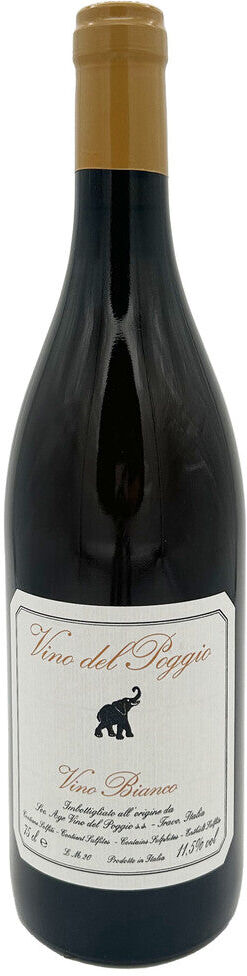
Vino del Poggio - Andrea Cervini Bianco Vino del PoggioThe Bianco Vino del Poggio is one of the most interesting expressions of Italian orange wine, which encapsulates rusticity as well as extreme drinkability. Andrea Cervini, a winemaker in Travo in the province of Piacenza, is one of the most respected figures in the world of artisanal wine. The step from agritourism to vineyard is short, and Andrea manages to combine these two activities thanks to his immense passion for the bucolic world. A "neighbor" of Giulio Armani, a renowned oenologist, Andrea has drawn valuable advice from the pioneer of the area and has decided to adopt long macerations for both whites and reds. Deep and impactful bottles that overturn conventional tasting standards. Truly unmissable! The wine Bianco del Poggio is made from white grapes and is configured as a clear expression of what it means to vinify without compromises; Andrea has always chosen not to use chemical or synthetic substances in his vineyards. After the manual harvest, where the selection of the bunches takes place, the grapes are transported to the winery and fermented only through the interventionof indigenous yeasts with skin maceration of about 3 months. Vinified in large wooden barrels and in bottle, it is bottled without undergoing clarification or filtration. The Bianco del Poggio immediately attracts attention with its intense amber color. Suggestive and encompassing nose, where hints of orange peel, apricot, earth, and hay chase each other, in a picture that combines the innate generosity of the area where the winery stands with a bucolic portrait. The tasting is surprising for its ability to blend great freshness with a rigorous and austere tannin. A true white disguised as red, it leaves behind a remarkable persistence and an irrepressible desire for another taste. An unmissable experience for any wine lover.22,00 £*Shipping: 48,00 £Secure redirect to the provider
-
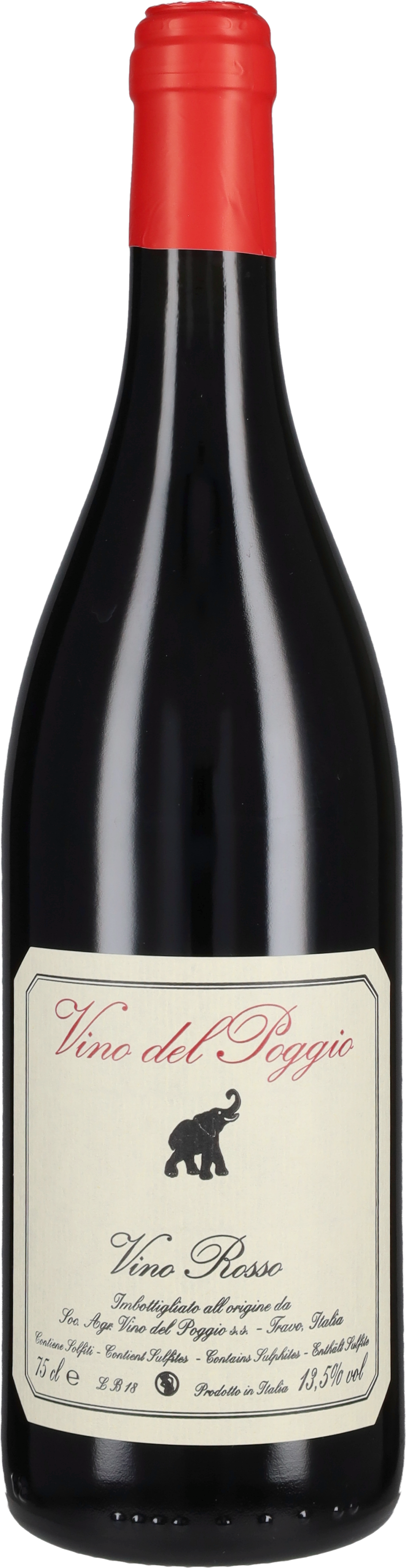
Vino del Poggio - Andrea Cervini Rosso Vino del PoggioThe Rosso Vino del Poggio is a label with an artisanal character, inspired by the oldest traditions of good everyday wine from the past. It is produced with a selection of red grape varieties from the estate's vineyards, vinified in assembly to achieve a harmonious and balanced final result. It is a bottle with an intense and fruity sip, a straightforward and satisfying wine. The very simple vinification, carried out with minimal oenological intervention and only aiming to assist the transformation of the grapes into wine, gives the bottle a typically convivial personality. It is perfect to enjoy in the company of friends in informal situations. The Rosso is produced in a small Piacenza reality. Vino del Poggio is a winery founded by Andrea Cervini in the hilly area of Val Trebbia. The vineyards are located within an uncontaminated environmental context, and the winery is managed with the utmost respect for nature, according to the principles of organic farming. Only small quantities of sulfur and copper with the intent of producing genuine and healthy grapes. The vineyards of red grape varieties are about 10 years old and are cultivated on calcareous-clay soils. The grapes ferment spontaneously with indigenous yeasts in temperature-controlled stainless steel tanks with a long maceration on the skins. The wine matures in steel and is bottled without filtration and without the addition of sulfur dioxide, in order to maintain the expressive integrity of the grape. The Rosso Vino del Poggio is a bucolic label, inspired by the peasant world of the past and a simple and natural viticulture, which did not know chemistry and invasive oenology. Visually, it presents a bright ruby red color and expresses a bouquet with intense aromas of small red berries, cherry, currant, wild strawberries, hints of underbrush, humus, delicate spices, and medicinal herbs. With good structure, it is characterized by ripe tannins and a generous and juicy fruit, which extends towards a harmonious, fresh, and savory finish.15,00 £*Shipping: 48,00 £Secure redirect to the provider
-
What comes after il faudrait in French?
In French, "il faudrait" is followed by the infinitive form of a verb. This construction is used to express a suggestion or a polite request. For example, "il faudrait partir tôt" means "it would be necessary to leave early." **
-
How does "il faut" work in French?
"Il faut" is a common expression in French that is used to convey the idea of necessity or obligation. It is followed by an infinitive verb and is used to express what needs to be done or what is necessary in a given situation. For example, "Il faut manger" means "It is necessary to eat." This expression is used to give advice, make suggestions, or express general truths. **
-
What is an El, Sl, and Il?
An El, Sl, and Il are all suffixes used in the English language to form adjectives. "El" is used to form adjectives that mean "pertaining to" or "characterized by," such as in the word "musical." "Sl" is used to form adjectives that mean "tending to" or "inclined to," such as in the word "careful." "Il" is used to form adjectives that mean "having the nature of" or "capable of," such as in the word "flexible." These suffixes help to create new adjectives by modifying the meaning of the base word. **
-
What do the abbreviations el and il mean?
The abbreviation "el" typically stands for "elevated" and is commonly used in the context of transportation systems, such as an "el train" which refers to an elevated railway. On the other hand, "il" is often used as an abbreviation for "Illinois," which is a state in the United States. It can also be used as an abbreviation for "in-line" in various contexts, such as in sports or technology. **
* All prices are inclusive of VAT and, if applicable, plus shipping costs. The offer information is based on the details provided by the respective shop and is updated through automated processes. Real-time updates do not occur, so deviations can occur in individual cases. ** Note: Parts of this content were created by AI.